Active aging: why culture matters as much as a walk
The concept of active aging has often been reduced, in many places, to merely keeping the body active and learning how to use WhatsApp. However, the WHO defines it in much broader terms: health, participation, and security. Here, we address the forgotten pillar — the cultural one — and why it is of such vital importance.

Gabriel Serrano

The concept of active aging has been circulating for more than twenty years, and if you hear about it at a cultural center or your local town hall, you probably think of fitness classes, WhatsApp workshops, and, with any luck, an occasional excursion to a museum. It is not just that. The original definition—by the World Health Organization in 2002—is considerably more ambitious.
What the WHO exactly said
Active aging, according to the WHO, is the process of optimizing opportunities for health, participation, and security in order to enhance quality of life as people age. Three key words—health, participation, security—and one goal—quality of life.
Health is what has been addressed the most: exercise, diet, fall prevention, blood pressure control. Security has been attended to through pensions and social services. But participation—which the WHO itself describes as cultural, social, and civic participation—has, to a large extent, been left unaddressed. And it is precisely the pillar closest to what we now call meaning.
Why culture is health, participation, and security all at once
Here is a fact that is not repeated enough: meaningful cultural activity—not just "any" activity—benefits all three pillars of active aging simultaneously.
Cognitive health. Learning, reading demanding texts, and discussing ideas are interventions with a proven effect on cognitive reserve and the prevention of decline.
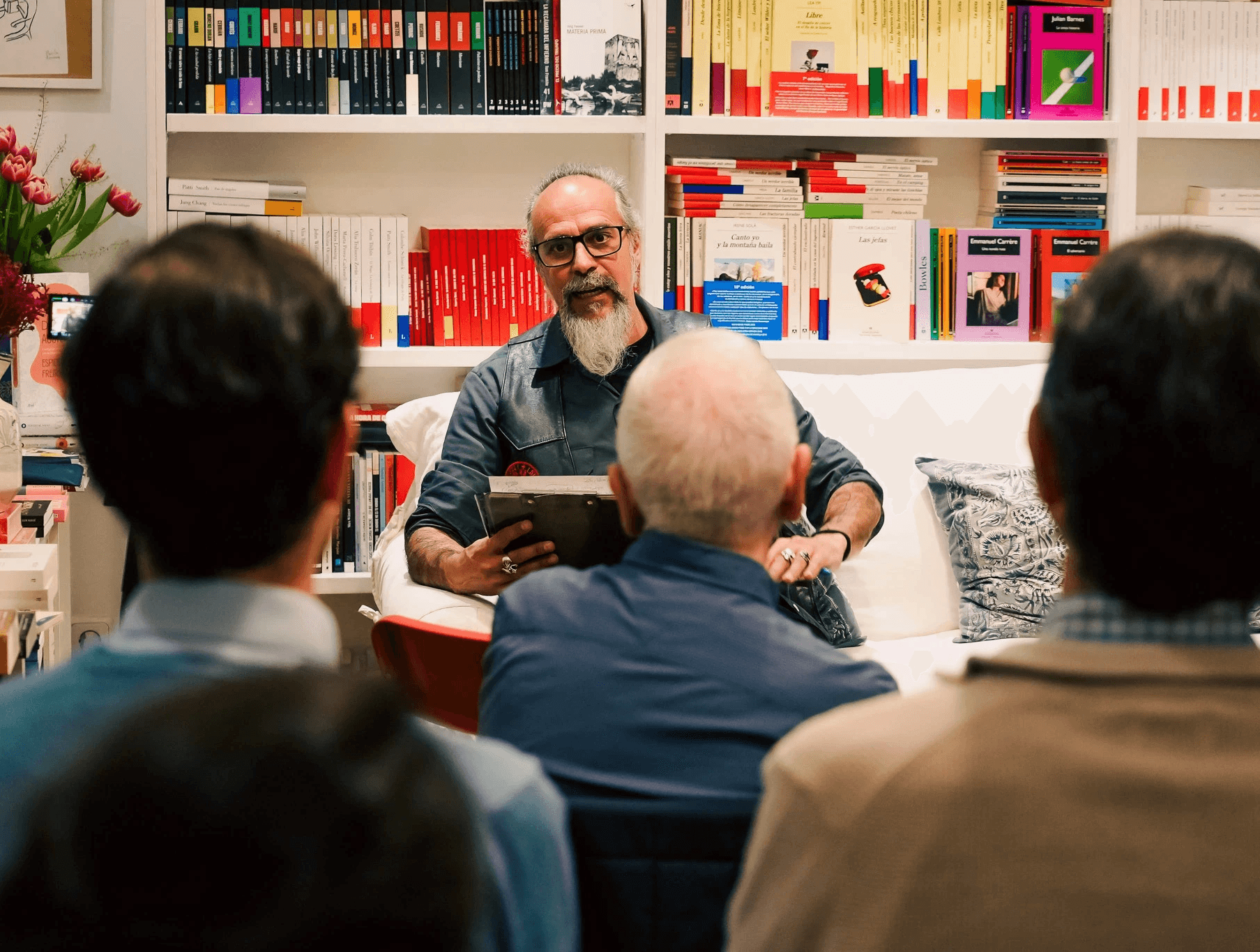
Participation. A reading group, an educational trip, an encounter with an author—these are spaces for social connection at the level of the questions that truly matter. It is not the same as just grabbing a coffee.
Meaning and well-being. Having an active intellectual project is one of the strongest predictors of emotional well-being in older adults—even above income level.
The public offering: what exists and what is missing
If you look at the active aging programs of most Spanish municipalities, you will see a pattern:
A lot of physical activity (yoga, dance, walking, tai chi).
A fair amount of digital literacy (WhatsApp, online banking).
Some cultural excursions (museums, monasteries).
Occasional memory workshops.
It is a good offering. But it is incomplete. What is missing is the space where older adults are not merely attendees but interlocutors: where serious thinking takes place, where reading is done with a plan, where discussions are held with contemporary authors, and where community is built around the grand questions of humanity.
Culture is not an add-on to active aging. It is its very heart.
What pioneering town halls are beginning to do
In the last two or three years, several administrations—both regional and municipal—have begun to contract specific humanities education for older adults. The reason is twofold: on one hand, statistics on loneliness and isolation are driving the search for deeper answers. On the other hand, older adults themselves are asking for it: internal surveys in various municipalities show that the most highly demanded offering among older adults with secondary or higher education is not digital or athletic, but rather cultural and humanistic education.
It is the missing pillar. And the effect on the indicators that truly matter—life satisfaction, quality of relationships, mental health—is beginning to be documented.
Why Thenomba Senior fits in here
Thenomba Senior was born, in part, to offer town halls a tool to address this pillar. It is a twelve-month educational journey, accessible from any device, featuring a structured curriculum and a network of first-class allies. It can be offered to a group of older adults as part of a cultural active aging program, and it is complemented by in-person meetings and a dashboard for the administration to track actual progress.
But it also fits—wonderfully so—for an individual older adult, a retiring couple, or a group of friends who decide to embark on it together. If you are interested in any of these avenues, call us at +34 604 56 13 90 and we will explore it with you.
Source: World Health Organization (2002). Active Ageing: A Policy Framework. Geneva: WHO.
Cover image generated with artificial intelligence.
About Us
Discover the school you
never had.