A table in Cambridge
Nomba College and the Real Colegio Complutense at Harvard University convene the first edition of a seminar on human dignity and flourishing, bringing professors and students together at the same table.

Gabriel Serrano

In 1364, a Spanish cardinal founded a house in Bologna so that the best students from Spain could live and think alongside the oldest university in the world. The Royal College of Spain remains open today, six hundred and sixty years later: it is the oldest institution of its kind on the planet, and its rooms have hosted everyone from Antonio de Nebrija to a significant portion of Spanish intellectual history.
In 1990, that tradition crossed the Atlantic. The President of Harvard University, Derek Bok, and the Rector of the Complutense, Gustavo Villapalos, signed—under the auspices of the Spanish Crown, following a visit by King Juan Carlos I to Harvard two years prior—the agreement that created the Real Colegio Complutense at Harvard University. The King inaugurated it in 1993. Since then, it has occupied a historic building at 26 Trowbridge Street in Cambridge, just steps from Harvard Yard.
It is not a representative office nor an exchange program. It is an affiliate center of Harvard since 1990—the College itself presents itself as the only Spanish center of excellence of its kind in the United States—, with its own legal personality in Massachusetts and a governance difficult to match: its activities are approved by an Academic Council co-chaired by the Rector of the Complutense and the President of Harvard, with members from the main schools of the American university, and whose honorary presidency is held by King Felipe VI. Several thousand Spanish researchers and students have passed through its programs in three and a half decades.
Seven centuries separate Bologna from Cambridge, and the idea remains the same: to build a house next to a great university so that our best minds can converse with those from abroad, as equals and in our own language.
In June 2027, that house welcomes a new table.
The First Edition
Nomba College, together with the Real Colegio Complutense at Harvard University, convenes the first edition of an international academic seminar dedicated to a question that this blog has been exploring from all angles for months: human dignity, relationships, and flourishing—approached from the Ibero-American and Spanish perspective.
The theme is not a mere gesture. The largest study ever conducted on human flourishing yielded two findings that demand precisely this conversation: that young people in rich countries are the ones who flourish the least, and that several countries of our language—Mexico being among the top in the world—score higher in purpose, relationships, and character than much more prosperous societies. There is something in the Hispanic way of experiencing connections, family, and transcendence that the world is trying to understand through surveys. Sitting down to think about it seriously, using the categories of our own intellectual tradition, is not an exercise in pride: it is a pending contribution.
Professors and Students, Together
The composition of the table is the hallmark of the seminar, and it is deliberately unusual.
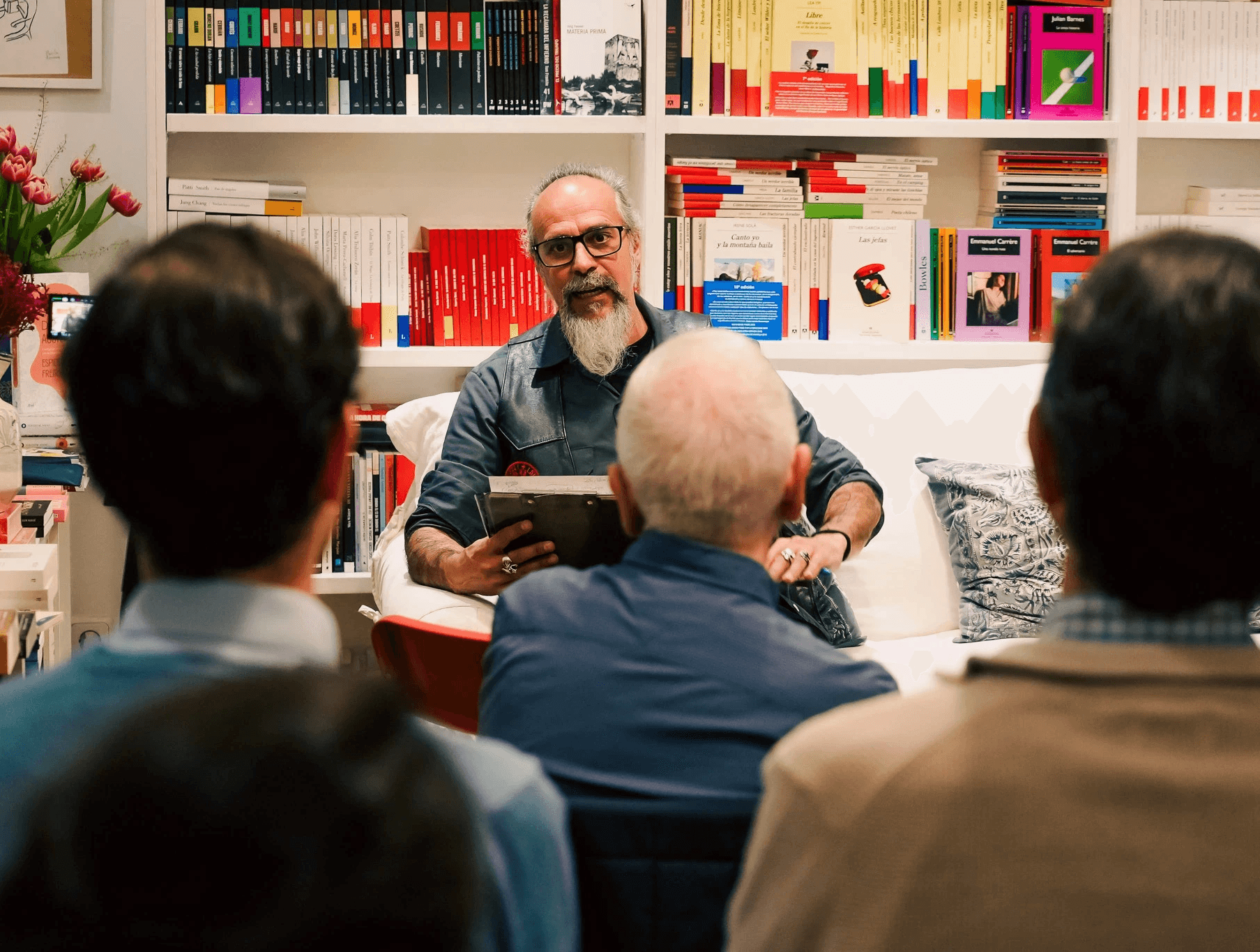
Academic conferences seat professors; mobility programs move students. This seminar seats both at the same time: each founding university arrives with a delegation of three—one professor and two students—who share the table with each other and with Harvard intellectuals and professors participating in an academic capacity.
The reason stems from the data that matters most to us. If research on what makes a university stage life-changing has shown anything, it is that the decisive variable is not the prestige of the institution, but the relationship between a student and a professor who cares. A seminar that brings both together in the most ambitious conversation of the year is not a travel prize: it is that relationship, elevated to its highest expression. Few formats exist—perhaps none—where a twenty-one-year-old student discusses human dignity at the same table as their professor and a chairholder from across the Atlantic. That is the format.
The Work
The seminar does not end when it concludes. All sessions are transcribed, and from them, a collective academic work is edited, co-authored by the participants. What is spoken in Cambridge remains written, citable, and in libraries—which is the way the university, since Bologna, turns a conversation into a legacy.
How to Participate
The first edition has a deliberately limited capacity—between thirty and fifty participants in total, including delegations, speakers, and guests—because the format of real conversation does not survive lecture halls.
Delegation spots belong to the founding universities of the Nomba Talent program, guaranteed as long as their agreement is in effect: one professor and two students per institution, selected by the university itself. The spot covers participation in the seminar and the academic program; it does not cover flights, lodging, or per diems, which are the responsibility of each institution—we state this here, in writing and from day one, because that is how we want to work.
And a note on what this seminar is not. It is not endorsed, accredited, or certified by Harvard University: it is organized together with the Real Colegio Complutense at Harvard University, an affiliate center of Harvard since 1990, and Harvard professors participate in it in an academic capacity. This precision does not detract from us. On the contrary: in a time when anyone stamps someone else's coat of arms on a brochure, stating exactly what one is—and being proud of it—has become the best business card.
A house with seven centuries of lineage. A table with a place for both professor and student. A question that our language is in a position to answer better than almost anyone else.
In June 2027, in Cambridge. The first of many.
Cover image generated with artificial intelligence.
About Us
Discover the school you
never had.
And what if this were your next year?
A journey of ideas, conversations, and twenty minutes a day to continue growing.
The university
Rankings do not measure what you promised
Oxford has held the top spot in THE for 11 years; MIT, for 15 in QS. Two number ones at the same time, 17 indicators, and one notable absence: what your ethos promises is not in the table.
The individual
Read the Story
History explains the past; the novel immerses you within it. Trafalgar, War and Peace, The Bridge on the Drina, and Suite Française: why to read them and in what order.
The era
The Greek Professor Who Won the Nobel Prize
The Swedish Academy awards Anne Carson for creating new forms from the classical tradition. Spain saw it first: the Asturias 2020 citation had already said so.