In Conversation with Gregorio Luri
A conversation with Gregorio Luri on the school as a place where one learns to think, and on what is lost when it is mistaken for a service.

Gabriel Serrano
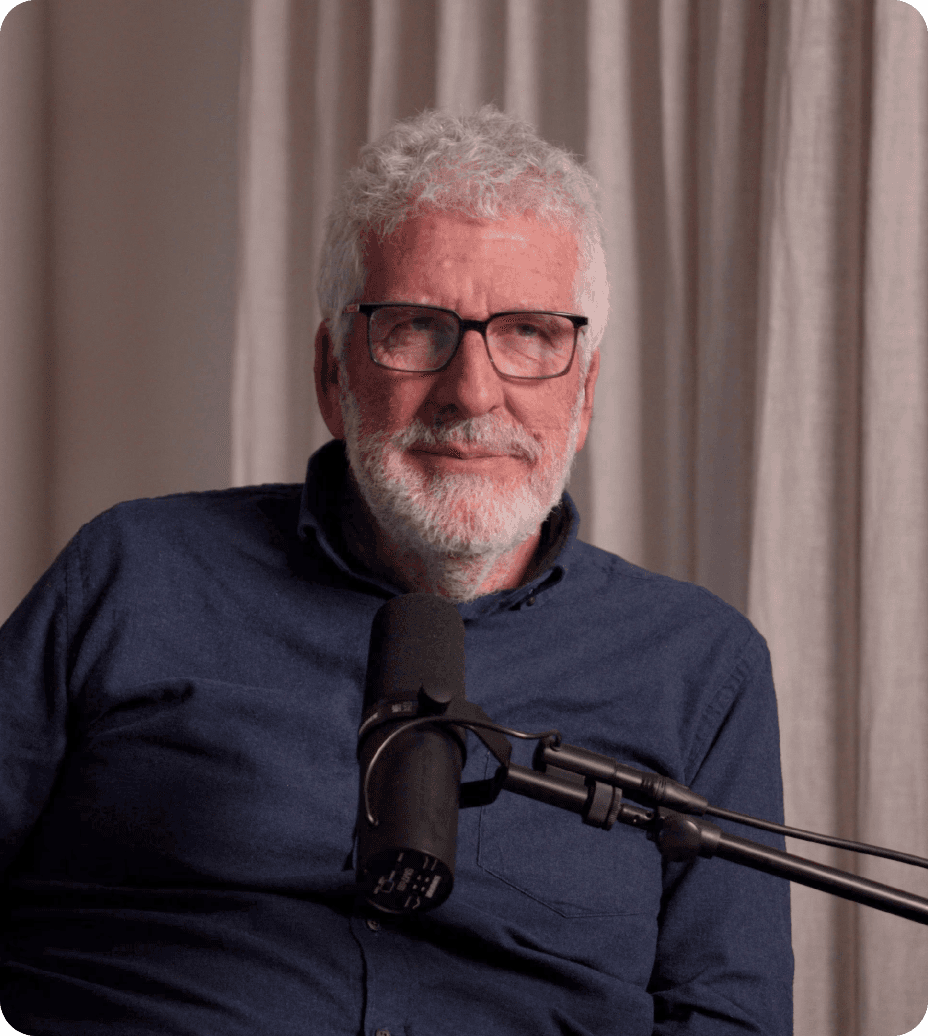
Gregorio Luri was born in Azagra, Navarre, in 1955, and he likes to remember that before becoming a philosopher, he was a schoolteacher. This biography is not an embellishment: it explains his tone. A Doctor of Philosophy and author of an extensive body of work on education and thought, Luri writes and speaks from a rare position in the Spanish educational debate: that of someone who knows the classroom from the inside and the philosophical tradition from within, and refuses to betray either. At Nomba, we regard him as what he is: the voice of home in school education, and this first installment of our allies series aims to introduce him to those who have not yet read him.
His most cited book bears a title that is already a statement of intent: La escuela no es un parque de atracciones (School is Not an Amusement Park) (Ariel, 2020). The central thesis challenges one of the most repeated commonplaces of recent decades: the idea that in order to learn, one must start from the spontaneous interest of the student, and that school is boring because it fails to connect with their motivations. Luri reverses the arrow: interest is not the precondition for knowledge, but its consequence. No one is interested in what they completely ignore. It is knowledge, once it begins to be possessed, that awakens the appetite for more knowledge. A school that waits for interest to arrive on its own, he argues, condemns its students to be interested solely in what they already brought from home.
Powerful Knowledge
Hence his defense of what pedagogical literature calls "powerful knowledge": systematic, structured, and demanding knowledge that a child will not spontaneously find in their environment, and which precisely for that reason justifies the existence of school. And hence also the social dimension of his argument, perhaps the most uncomfortable one for his critics: students from families with libraries at home survive any pedagogy, because their environment compensates for whatever the school fails to provide. It is the most vulnerable students who most need a school that is ambitious with knowledge, and who lose the most when the institution lowers its expectations to mere cultural entertainment. A school that aspires only to entertain them, he suggests, abandons them with a smile.
None of this makes Luri a nostalgic advocate for the schoolmaster's platform and the cane, a caricature with which he is sometimes dismissed. He carefully distinguishes high standards from harshness: demanding effort means taking the student's capacity seriously; causing fear is something else entirely, and no sensible person defends it. He champions exams not as an instrument of punishment but as training: the effort of retrieving what has been learned consolidates memory, and evidence-based practice on retrieval practice supports his view. And when he speaks of effort, he does so without epic grandeur, with the naturalness of someone who grew up in a village where work was not a value but a fact of life.
Attention: The New IQ
In recent years, Luri has increasingly focused his attention, if you will excuse the pun, on attention itself. The formula he has popularized—attention is "the new IQ"—condenses both a diagnosis and a program. The diagnosis: in an environment designed to fragment concentration, the capacity for sustained attention has become the scarce resource that most differentiates developmental trajectories. The program: since it is scarce, the school must treat it like any other valuable capability—as something to be deliberately educated, through long texts, silent work, and teachers who themselves embody the concentration they demand. He often gifts teachers a liberating idea: the attention of a class cannot be commanded; it must be won, and it is won by having something worthy to offer.
It would be unfaithful to our style to present his thought without its counterpoints, and Luri himself, a Socratic by trade, would be the first to ask for them. His critics object that the opposition between knowledge and pedagogical innovation is gentler than his polemics suggest; that many active methodologies, when well applied, pursue precisely the solid knowledge he defends; and that the diagnosis of Spanish schools possesses more regional and developmental nuances than can fit into a mainstream essay. These are reasonable objections that he usually accepts with good sportsmanship, not least because his work is filled with praise for specific teachers from all methodological schools. His grievance is not against innovation: it is against frivolity.
A Classic in the Precise Sense
Anyone who has heard him speak live knows his other facet: the conversationalist. Luri belongs to that lineage of thinkers who distrust monologues, pepper their talks with anecdotes about teachers and villages, and prefer to leave behind a good question rather than a slogan. His erudition—Plato, the classical tradition, the history of education—does not overwhelm; it welcomes. And perhaps that is why he connects so well with teaching staffs: he does not address teachers from the pulpit of the expert who comes to correct them, but from the grateful memory of the schoolteacher he once was and, deep down, has never ceased to be.
At Nomba Education, where teacher training relies on unhurried conversations with the very best, Luri occupies a place described by his own work: that of knowledge which, once tasted, awakens the appetite for more. Starting this series of allies with him is no coincidence. It is a declaration of the school we come from and the one we wish to serve: one that does not settle for entertaining anyone, because it respects its students—and its teachers—too much to offer them anything less than the best.
Cover image generated with artificial intelligence.
About Us
Discover the school that
you never had.
And what if this were your next year?
A journey of ideas, conversations, and twenty minutes a day to continue growing.
Continue reading
The era
The year the OECD turned its gaze to the staffroom
The OECD dedicates its annual report to teacher shortages and the attractiveness of the teaching profession. What it says about Spain, the paradox of a faculty that feels overlooked, and what your institution can do.
The cloister
What we celebrate on October 5th
October 5th does not commemorate a tribute, but rather a 1966 document regarding the dignity of the teaching profession. What your faculty celebrates, what TALIS and UNESCO say, and what your center can do.
The school
Evaluate without discouraging
A classic study shows that a grade can erase the best feedback. What true formative assessment is, and how to evaluate with high standards without discouraging students.


