On putting down roots
Chapter 18 of The Little Prince deeply resonated with him at the age of ten and has remained with him ever since. On belonging, the Humanities as a means of taking root, and a month of August that knew no rest.
Rodrigo Sangrador

I must have read The Little Prince 5 or 6 times. With each new reading, I draw different ideas, particular reflections, and distinct perspectives. But every time someone speaks to me of The Little Prince, I only remember the first time I read it. More specifically, when I reached chapter 18, something stuck with me. Perhaps 10 or 12 years have already passed since I first read it, and that exact moment still hasn't left my mind. Surely you have read it. Do you remember? The Little Prince, on his essentialist expedition, crosses the desert, encounters a flower, and asks her where the men are. The flower, surprised, tells him that there are perhaps six or seven humans in the entire world. She argues that it is very difficult to know where to find them. That the wind blows them away because they have no roots. And she asserts that having no roots causes them (men) much trouble and discomfort.
It remained engraved in my mind. I was just over 10 years old and I understood it perfectly. And since then, the theme of rootedness continually returns to me, and the more I grow, with even greater intensity. The more I learn about "adult life," the more I am impressed by the exact diagnosis the French author made in 1943. Running around all day, from here to there. Work, plans, noise, social networks... Incapable of remaining. Incapable of stopping. Indeed, the word "arraigo" (rootedness) comes from the Latin ad-radix; ad- means 'toward' and radix or radicare means 'root', that is, to take root, to settle, or to establish oneself firmly in a place. The same as "radical," which is not political fanaticism but rather root. In that sense, I am radically in agreement with the desert rose.
Many authors have spoken of rootlessness, disconnection, emancipation, and licentiousness. And what can I say. Perhaps the Humanities are the new form of rootedness. In a world that increasingly seeks the useful, measurable, and quantifiable, the Humanities are becoming one of the most powerful ways to establish oneself. My good friend Agustín has expressed this very clearly in this recent article published in Chile. I quote him directly: We cannot wait for the right moment (for the humanities) that never comes (...) That being said, let us change the questions: What is the meaning of this time? Have you seen any economist talking about poetry? Any politician thinking about how to bring beauty into the world? Perhaps a statesman trying to reverse the crisis of love and commitment? And he ends with a definitive sentence that summarizes everything very well: Perhaps the humanities do not rebuild cities or control inflation, but they help answer the question of what makes it worthwhile to rebuild cities and combat inflation. It is, to say the least, something to reflect upon.
Some Nomba allies have spoken about this recently: María Calvo in a thinkglao in Segovia, or Diego Garrocho in a radio interview, who wondered why our grandmothers knew the names of all the neighbors in the building and now we do not know the name of our neighbor next door.
I hope you were able to rest this August. Vacations are always a time to stop and change activities. Just as our students have done, for example. As I mentioned in the last newsletter, we launched the summer challenge. Here are the most advanced participants so far.
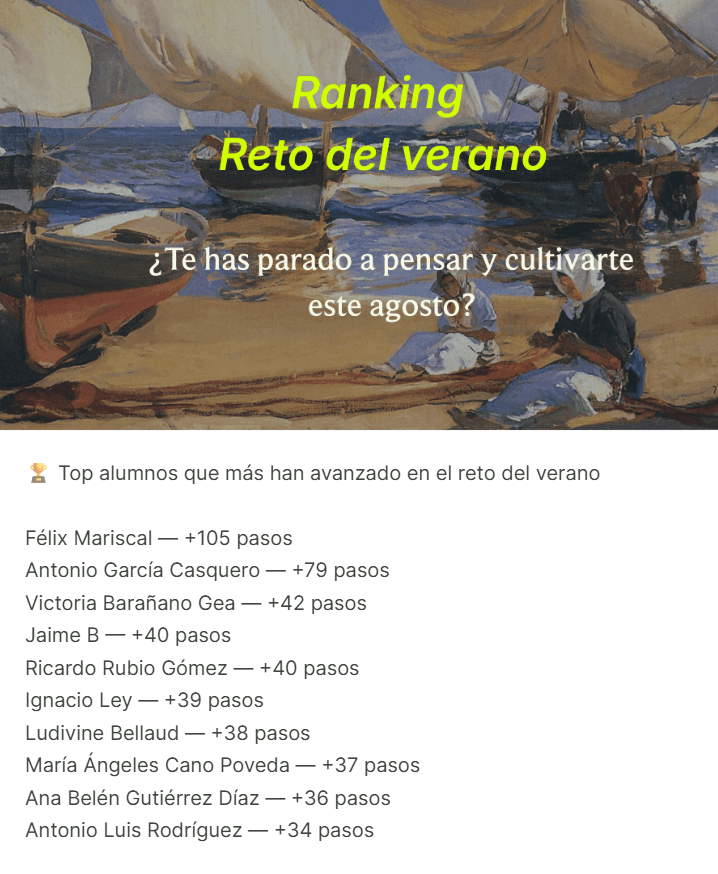
Félix Mariscal is in the lead, by a veeeery wide margin. Do we have a clear winner? By the way, of the TOP 10, only 3 are women. Girls, time to step it up...
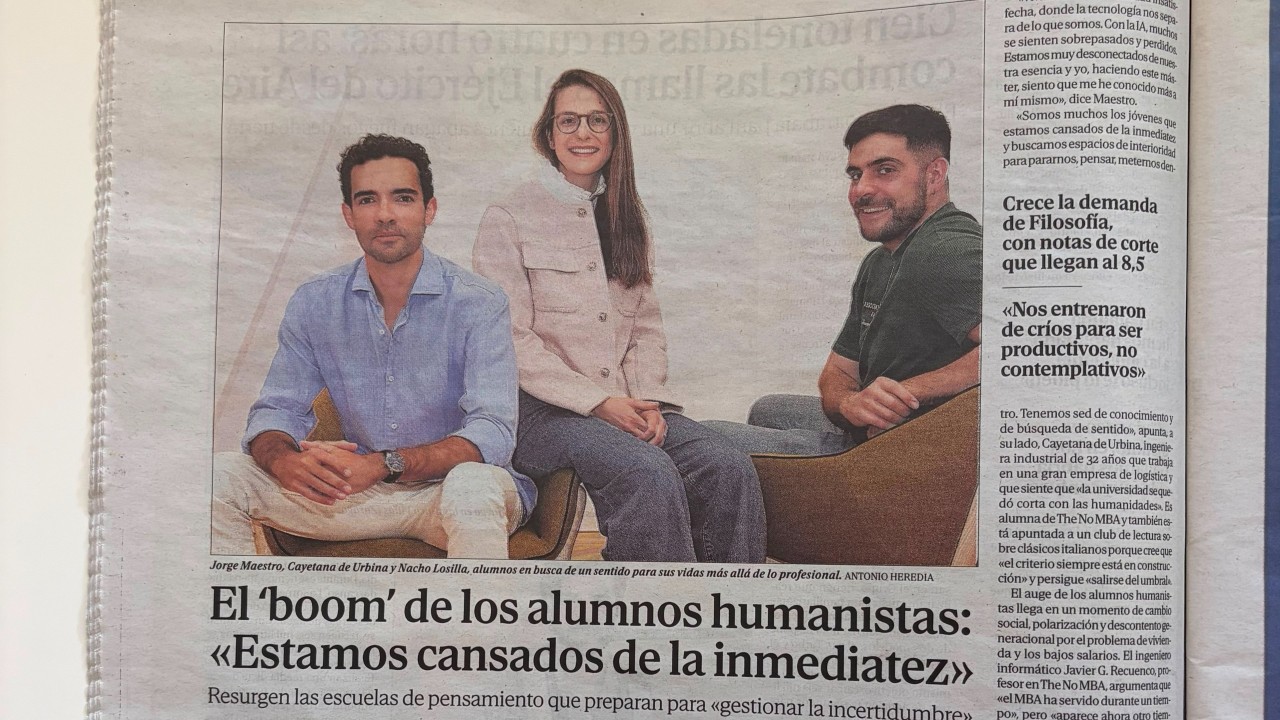
I also forgot to mention that we appeared in a feature by El Mundo. It was prepared with great care by Olga R. Sanmartín. It covers the rebellion of humanities students and the importance of reclaiming the humanities in times of uncertainty. The comments on the article are a bit of a letdown: people who haven't understood what this is about. But well, there are all kinds of people and that is wonderful. I refer to Goethe: "They bark, a sign that we ride."
At It´s Time To Think we haven't stopped either. Well, yes, we stopped, but to think, which is what we like best. And yes, people got nervous. Because we brought Iván Espinosa de los Monteros to Comillas. And it seems that thinking without political or social labels, with someone who is different from you, is a luxury reserved for a few. A pity, but we ride on, so we are chill. We also had Tomás Alfaro at El Rayo Verde.
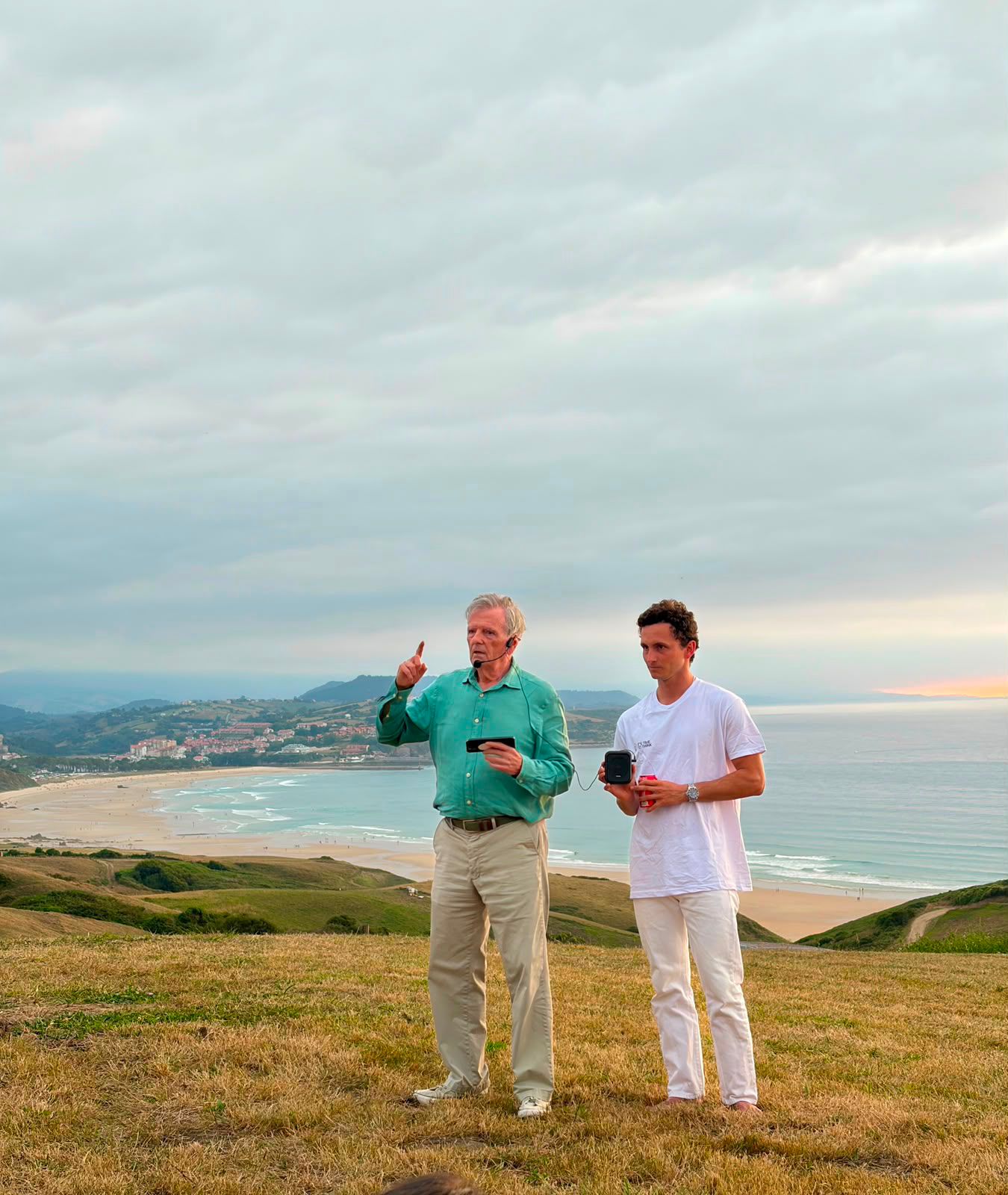
Tomás Alfaro, ally at TheNomba, with the spectacular views from El Rayo Verde in Cantabria
Our Hispanic-American students met, as usual, for their monthly online live session. They are consistent and punctual in their meetings, and they love putting a face to other Nombas who are on the same journey. And another group of students who met under the Alhambra.
It is time for me to close. But not without telling you something important. On Tuesday, September 1st, we will host the II Open House at TheNomba. If you want to see what the platform looks like from the inside (masterclasses, methodology, mentoring, reading plans, message board, Nomba social network...), or if you need one final push to decide to become a Nomba, this is your chance. We will have a surprise for you and we will share things that will leave more than one of you speechless. Don't miss it... Tuesday, September 1st at 8:00 PM Spanish time. Now that the new academic year is approaching, you can continue living as you have until now: from here to there all day, like a headless chicken... or you can start truly living. 15 minutes a day. Are you in? You can join the WhatsApp chat to receive all the information about the event.
At TheNomba we were really looking forward to September. Thinkglaos, Nomba, in-person events... and maaaany, many little things. Stay tuned.
By the way, we have opened a new space in TheNomba for quieter reflections and articles. We have called it The Forum. More news on this soon.
See you the last week of September.
Best of luck with the return to normalcy!
PS: in a town in Navarra, Bald Men's Day was celebrated for the twenty-fifth consecutive year, where they gather to celebrate the pride of having no hair. More than one reader might find it comforting to know they are not alone. And from TheNomba, we also wanted to celebrate it.