FOMO as the Enemy of the Present
We are not the lives we miss out on. On the fear of missing out, the freedom found in staying, and the everyday miracles that save us.
Rodrigo Sangrador
In general, the hero is there to protect the common man. He cannot embark on adventure while despising the everyday: if he attacks the fire-breathing dragon, it is to defend the small flame of the hearth; if he triumphs over the Lernaean Hydra, it is so that artichoke heads may sprout again. His extraordinary existence is at the service of the ordinary. He is not afraid to expose the former to save the latter. (Hadjadj, F. ‘Tom Cruise and His Mission: Impossible’).
The month of May has flown by. So fast that it feels as if it was only yesterday that I was writing to you about work, wonder, or freedom. This month I have had so many things on my agenda that it is as if time had moved twice as fast.
Among many other things, a couple of weeks ago I had the opportunity to attend the presentation of an essay by Ricardo Calleja titled “Aventurar la Libertad”, an essay that won the runner-up prize for the Sapientia Cordis Award. I really liked the thesis that, generally speaking, there is more freedom in remaining than in dispersing. And I liked even more the moment when Ricardo quoted an expression from his good friend—who was present at the event—Pedro Herrero, “we are not the life we miss out on“.
And the thing is, I don't know about you, but lately I keep hearing the expression FOMO. For the few non-young people who read this newsletter and do not know what it is, it stands for “Fear of missing out,” which translates as the fear of missing out on something or being excluded from something. It is a concept that has gone highly viral lately and is used in the most normal way in the world, mainly among the youngest. Furthermore, it is used for everything. Concerts, trips, social media, plans, events, dinners, groups of friends, meetings... We have to be in on everything; if not, we get FOMO. It's as if you were browsing Instagram, seeing the wonderful and curated lives of others, and the little voice in your head was constantly whispering: “And, while they are enjoying themselves, what are you doing?”. It is a kind of existential anxiety and rejection of being excluded from a community. It is a hyper-productive urge for movement that pushes us to be constantly doing things. And those things, aesthetically, must be shareable on Instagram. They have to be perfect. They must have the approval of the crowd.
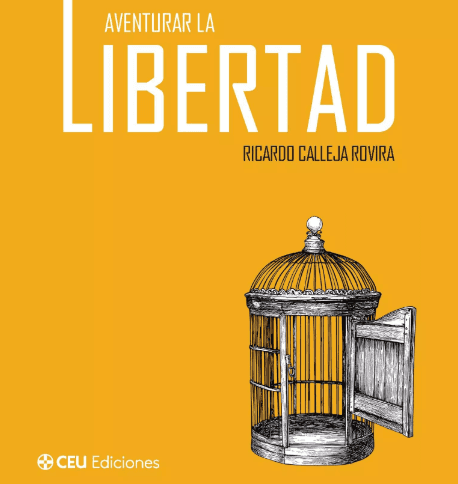
This is the cover of Ricardo Calleja's essay that I mentioned... The image of the cage with the door open to speak of slavery versus freedom seems like a stroke of genius to me.
Never before until now have we had the capacity to do so many things before us. Travel, shop, visit virtually, communicate with other people on the other side of the world in a single click, watch so much content on social networks, attend conferences, listen to music... Inputs, noises, and lights. Speed. Screens. You could say that we live in the society of "now". I want everything, and I want it now.
And between the passage of time and the passing days, we are left more focused on wanting to be there than on actually being there. Remaining. Learning to listen. Living in the here and now. Paying attention. Being amazed. FOMO cancels out our capacity to contemplate, to be patient, and to step out of ourselves. Because it throws you into the constant anguish of not being in the place where you are supposed to be. And of thinking about everything you could be doing, instead of what you have at hand.
Higinio Marín, in one of his classes at TheNomba, argues that one of the greatest ills of modern man is not knowing how to inhabit the present. FOMO makes us live in the past - for what we have missed - and in the future - for what we can do -, but never in the present. The word "present", used as a synonym for gift, comes from the Latin praesentare (to show, to place before, to offer). In turn, this term derives from praesens, which means "to be before someone" or "to be in sight." That is why FOMO is the enemy of the present.
Salvation is found in the small, everyday, ordinary things. My friend Fabrice repeats this to me a lot. And the WhatsApp status of my friend Pablo states that "At every moment, something comes to save us." In short, it means that life is sustained by small details. In everyday life, we are saved by unexpected coincidences, the beauty of a sunset, the smile of the bus driver in the morning, a hug at just the right moment, the deafening silence in the subway car, or seeing two elderly people walking hand in hand in the park. Encountering literature, nature, or a sincere look are those small "everyday miracles" that manage to keep the hope of life intact, especially in a world dominated by the click algorithm and the logic of "now".
The most spectacular thing about all this is that no great efforts are required to be saved in everyday life; you only need an attentive gaze. To remain listening. To stop. And to contemplate. Therefore, I believe Ricardo is right when he says that there is more freedom in remaining than in dispersing. Perhaps therein lies the key to everything. Knowing how to order the heart and remain in what is truly important.
Big numbers are great. And it is true that this month of May at TheNomba we have grown at a good pace. Big numbers are great, I insist. And seeing the project grow makes us very happy. But if something is big, it is because there must be many small things. Last month we told you about the first in-person gathering in Santander by Teresa and Carlos. This month we tell you that we had the first online gathering organized by the students themselves, from Central America.

Our students from Central America enjoying the first online Nomba gathering (the generation of bonds is catching on quite well, as you can see).
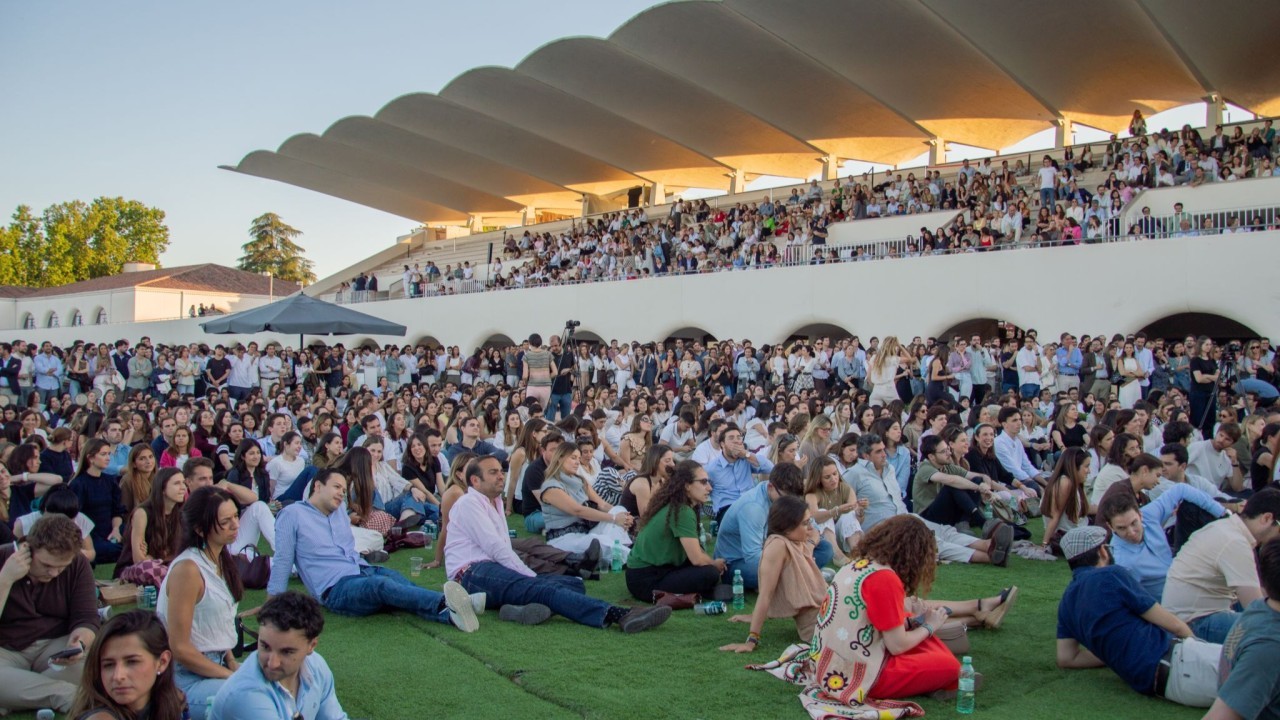
There are also slightly bigger things. Like the Great Social Transformation Thinkglao which was attended by around 2000 people, and was held at the Hipódromo de la Zarzuela. Recuenco, Toni Nadal, Hadjadj... and hand in hand with our friends from Ongiving. It was spectacular. If you wanted to go but couldn't, don't worry, in less than 2 weeks the Great Transcendence Thinkglao will be held. On June 11 in Madrid. If you want to listen to de Prada, Pablo D'ors, or Jesús G. Maestro and then enjoy dinner and beers with music, you can buy your ticket at this link.
And a couple more notes. Last Tuesday, more than 100 people joined the I TheNomba Open House, where we explained who we are, what the program looks like from the inside, and answered questions and doubts from our future students. The first of many, stay tuned for the next ones. This last week our product colleagues have added some new features to the platform such as the Nomba Social Network or being able to share a new step with your friends. I shared a class of Higinio's with a friend and he liked it so much that he is already in TheNomba. I didn't think it would be so easy to get someone to join. By the way, I didn't tell you anything about the Labor Day campaign: I encourage you to watch the video. When I saw it for the first time I almost started crying, I won't tell you whether it was out of excitement or laughter. But seeing a guy chopping onions while saying "I am Nomba" tells you everything.
And no, I am not going to comment on anything regarding Magnificas Humanitas because I haven't read it yet. Something tells me I will love it and that it is very Nomba.
Next month I hope to be able to do so.
If FOMO allows me to.
See you the last week of June.